Who this itinerary is for
This plan suits couples, families and small private groups who want a Luxor base and local support without joining a long international escorted tour. It assumes arrival by July 30 or 31 and departure no earlier than August 3. The eclipse is the fixed centre of the trip; sightseeing stays flexible around heat, transport and official event arrangements. Accommodation, airport transfers and private tours can be planned now, while any specific eclipse-viewing venue must remain subject to written confirmation.
Day 1: arrive and settle in
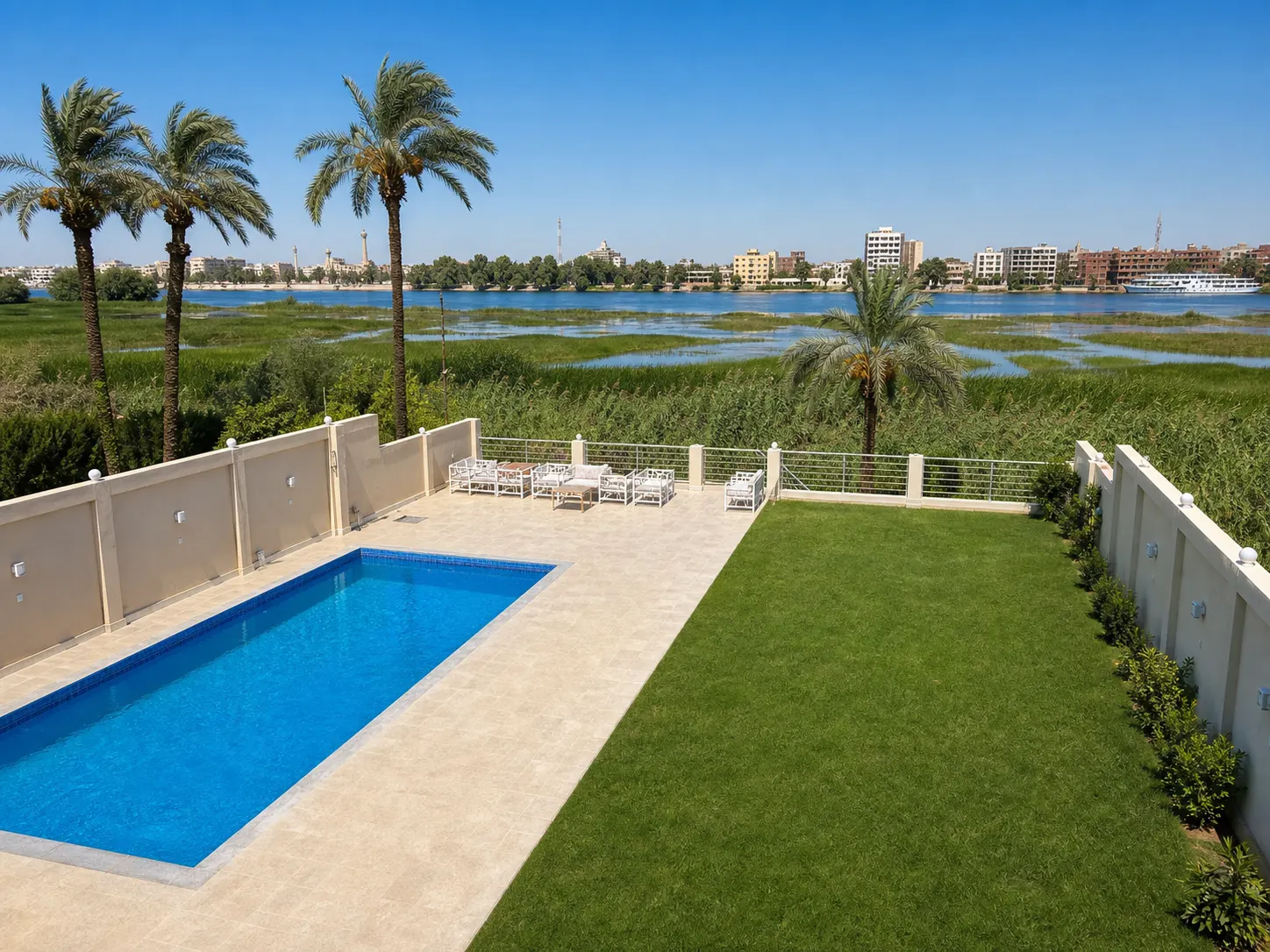
Use a flight-tracked private transfer from Luxor Airport or a pre-arranged station collection. Check into the apartment, recover from the journey and confirm the week’s contact numbers. If energy allows, take a short sunset Nile sail or have dinner overlooking the river; do not start with an exhausting temple circuit. Guests at Royal Nile Villas have the space of a two-bedroom apartment plus access to the pool and rooftop restaurant, which is useful during the hottest part of the year.
Day 2: West Bank before the heat
Start early for the Valley of the Kings, Hatshepsut’s temple and the Colossi of Memnon with a private air-conditioned vehicle and licensed Egyptologist. The purpose is not to see every tomb but to be back in shade before the afternoon heat peaks. Rest after lunch. Late afternoon can remain free or hold a gentle village, pool or Nile activity. Keep the guide informed that the group is conserving energy for the eclipse rather than filling every hour.
Day 3: East Bank and eclipse briefing
Visit Karnak at opening time, followed by Luxor Temple either in the same cool morning or after sunset. In the afternoon, hold a practical briefing: distribute and inspect eclipse viewers, confirm the next day’s pickup, review the venue rules, check water and medication, and agree how the group will communicate if networks are congested. Everyone should know which arrangements are confirmed, where the vehicle will wait and what the backup plan is.
Day 4: eclipse day—August 2
Keep the entire day dedicated to the event. Eat a substantial breakfast, wear light covering and carry more water than you expect to use. Travel to the managed viewing site well before the partial phase begins. Remain in shade when not observing, follow the site team’s eye-safety instructions and do not leave immediately after totality unless transport staff direct it; crowd movement may peak then. Return for a late lunch, pool time and an unhurried evening rather than another major tour.
Day 5: recovery and a flexible finish
Use August 3 as a buffer. Sleep later, enjoy the property and add only the experience the group still wants: a private Nile sail, a missed temple, a food experience or an onward transfer to a cruise. If the next stage is Cairo or Aswan, schedule it with generous time and confirmed luggage arrangements. A flexible fifth day protects the eclipse from the fatigue and transfer pressure created by a shorter programme.
What a responsible package should state
The quotation should separate accommodation, meals, airport or station transfers, private tours, entrance tickets, eclipse glasses, viewing-site access and eclipse-day transport. It should identify deposit and cancellation terms and explain what happens if government or venue arrangements change. Phrases such as “exclusive eclipse viewing” are meaningless without a named site and documented access. We prefer a clear local package whose confirmed and pending components are visible before payment.
Adding Cairo, Aswan or a Nile cruise
Add Cairo before Luxor if international flights make that natural, but reach Luxor at least two nights before August 2. Place an Aswan stay or Nile cruise after the eclipse when possible, turning the event into the beginning of a longer Upper Egypt journey. Avoid changing hotels on August 1 or travelling a long road route on eclipse morning. The eclipse block should remain stable even if the wider holiday contains several destinations.
Plan the rest of your Luxor trip
- What Time Is the 2027 Solar Eclipse in Luxor? Local Times and Duration
- Where to Stay in Luxor for the 2027 Solar Eclipse: West Bank, East Bank or Nile Cruise?
- Luxor eclipse 2027 accommodation package
- Cairo Pyramids & Sphinx tour
- Aswan & Philae day trip from Luxor
- Abu Simbel day trip from Luxor
- Sunset Nile boat cruise with dinner
- Compare all eight Luxor villas
- Add tours and experiences to your stay